

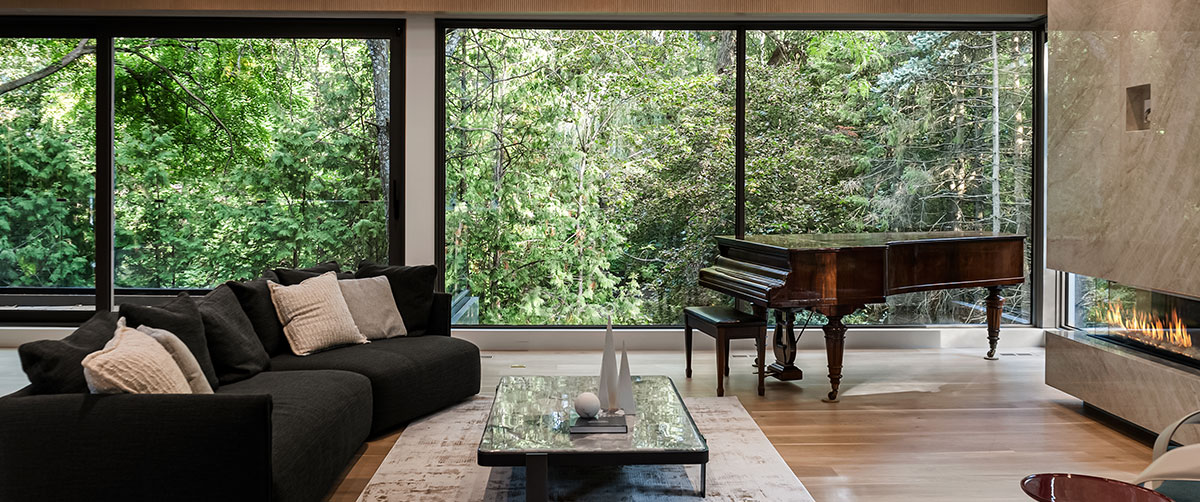

In this month’s Alumni Blog, Bahar and Shima share how a client’s story becomes the starting point for a design concept that responds to the architecture of the home and the functional needs of the family. One project that captures this creative process is a residence they designed for a client whose family has a deep connection to music. With a Steinway Artist in the family, the piano became more than an instrument within the home. It became an inspiration for the design itself.
Begin with a concept
One of the lessons that stayed with us from design school was the importance of beginning with a concept. Every project started with an idea. We would create an imaginary client, scenario, or narrative and allow that concept to guide our decisions, from space planning and form to materials and details. At the time, it felt like an academic exercise designed to teach us how to think creatively. Years later, we have realized that it was preparing us for one of the most important parts of professional practice.
Today, some of our most successful projects still begin exactly the same way: with an Idea. The difference is that the story is no longer imaginary. It comes from listening to our clients, how they live, what they value, the objects they are drawn to, their routines, and sometimes a seemingly small detail about their lives that becomes the starting point for an entire home.
From idea to design vocabulary
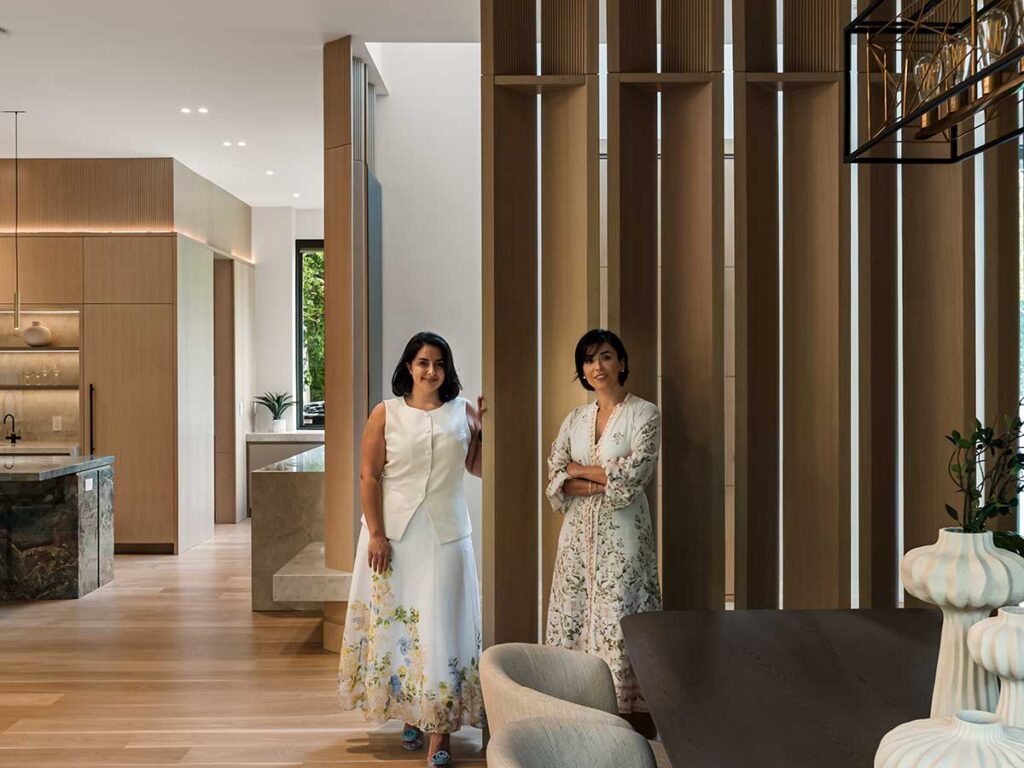
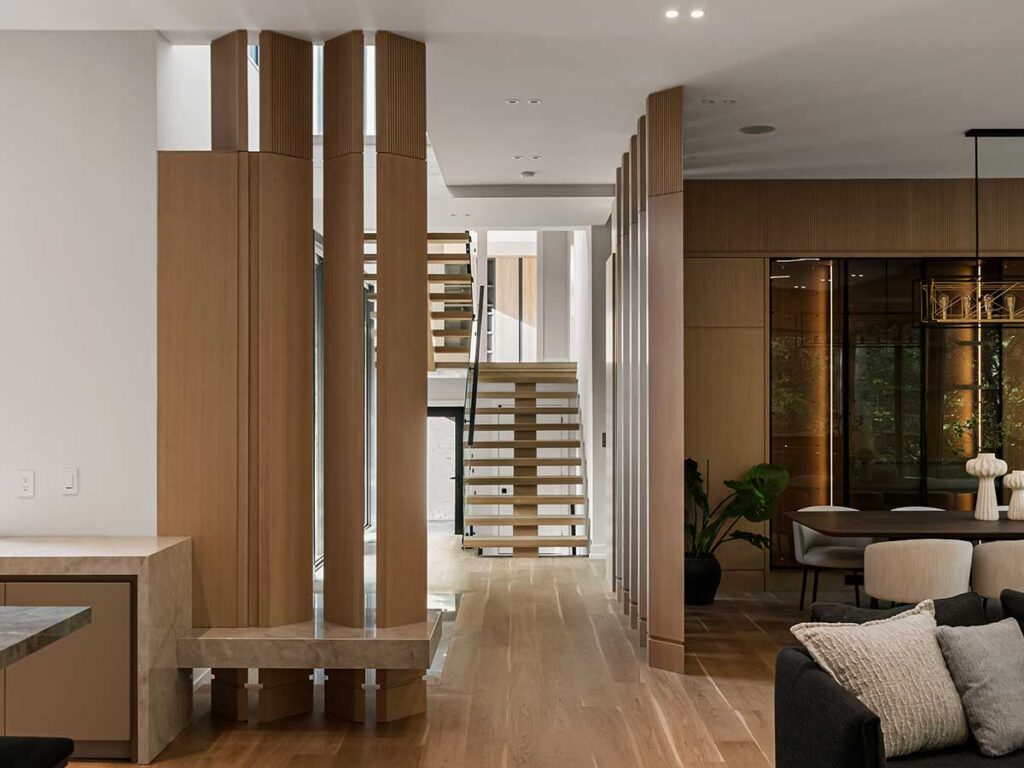
We began exploring the rhythm and repetition of piano keys and asking ourselves how those qualities could be translated architecturally without making the reference too literal. That idea gradually developed its own design vocabulary. Repetitive vertical elements appeared throughout the home. Fluted panels created rhythm along surfaces, while a series of angled screens helped define spaces without completely separating them.
Contrasting reveals and carefully considered lines introduced moments of light and shadow. Even the kitchen island was developed with an angular base, allowing the concept to influence not just how the home looked, but how its forms were constructed and experienced.
The result was not a home decorated around a piano. It was a home whose design language was quietly influenced by music.
Creative collaboration
This is where creative collaboration becomes such an important part of interior design.
A strong concept rarely comes from walking into a meeting with all the answers. It comes from listening, asking questions, observing and then interpreting what we hear through the language of design. In many ways, the process feels like composing a piece of music with the client. They bring their story, personality and rhythm. We interpret those ideas spatially through proportion, material, form and detail. As the project develops, each individual element begins to relate to the next until they become part of one composition.
Finding the story behind a space
Looking back, the concept exercises we worked through as students were teaching us much more than how to develop an interesting design. They were teaching us how to find the story behind a space.
And today, we have learned that when a project begins with a meaningful story, the strongest design decisions often follow naturally.
Check out Bahar and Shima’s video, “A Ravine-Side Transformation”.
Bahar Zaeem, Interior Design ’15, and Shima Radfar, Interior Design ’18, are the co-founders of RZ Interiors, a Toronto-based design firm known for creating refined, functional spaces that balance luxury with livability. With over a decade of experience, Bahar specializes in tailored interiors rooted in clean aesthetics and timeless appeal, drawing inspiration from global travel and her early foundation in project coordination and space planning. Shima, who studied Visual Arts in Iran before completing Interior Design at TMU, brings a sharp eye for colour, materials, and efficient layouts that enhance architectural character. Together, they lead residential and hospitality projects across the city, earning a reputation for design that feels both personal and enduring. Their work is guided by dialogue, trust, and a deep understanding of how people live — resulting in spaces that are meant to be lived in and loved.